Saturday, May 11, 2013

Brimfield Now and Again

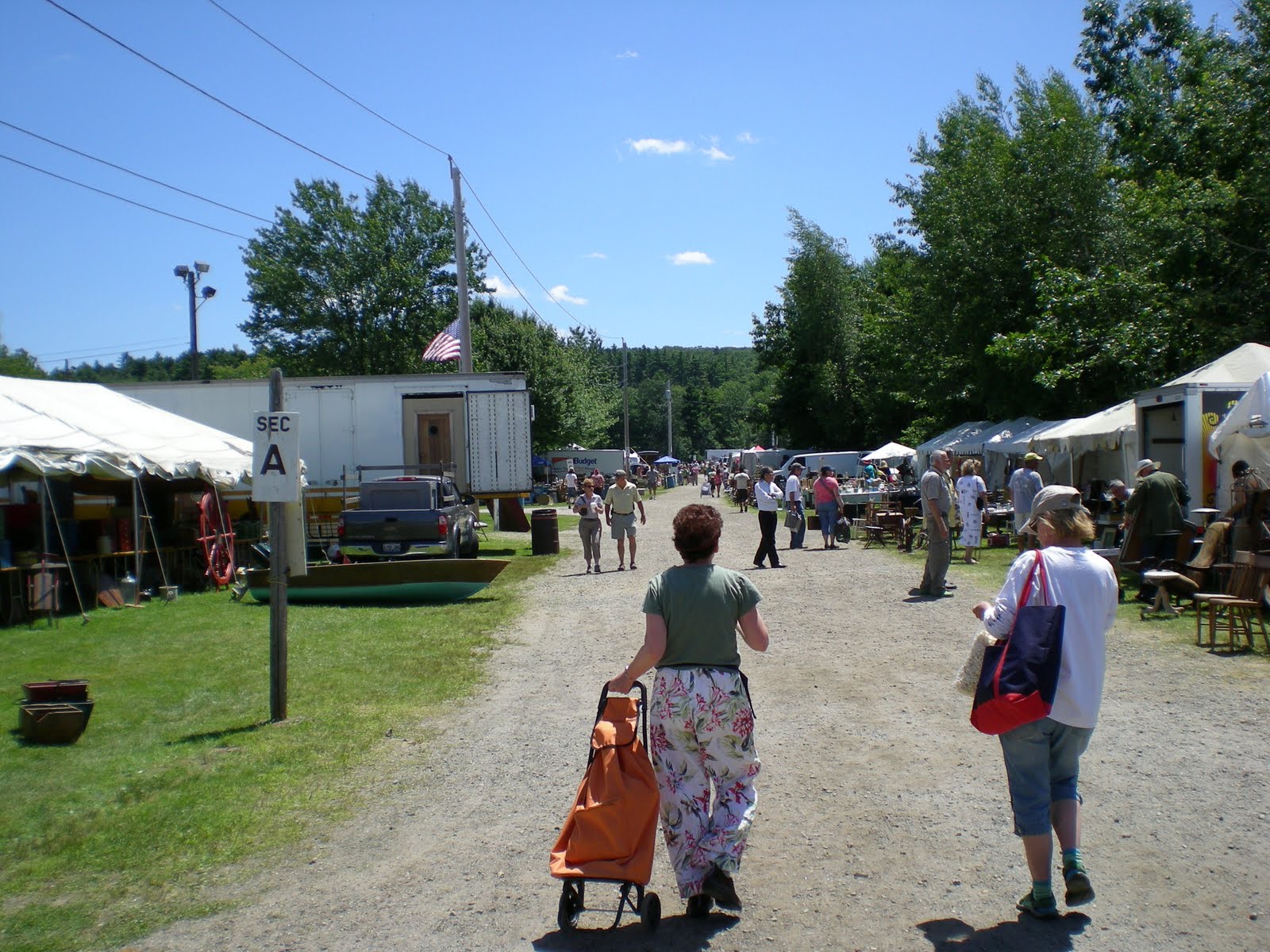
It is May just before Mother's Day.  Every year around this time antique dealers and collectors from all over the U.S.of A. and even people from other countries start getting ready to leave their area and head toward a small New England Town, Brimfield, Mass.  I have done these shows for many years both as an exhibitor and as a buyer.

My first Brimfield experience was less than what I had expected.  My oldest son, Chris, and I went up to set up on a whim with a fellow antique dealer and friend.  We were to share a tent with them for a week.  We got up early and traveled all day arriving at Brimfield in late afternoon.  It was May and it had been a rainy year much like this year and was still very cool out.  The field when we got there was water logged.  It was damp and very chilly.  The later in the day the colder it became, until I was chilled to the bone. At that point I swore that I would never ever do Brimfield again.  We worked unpacking and setting up until almost eleven o'clock.  The friends that we were setting up with had made reservations at a motel 45 minutes away>  It was too late to go there that night.  We found an all night diner and got a late snack and then found a place to rest until early the next morning.  Customers started coming in the wee hours armed with flash lights. We struggled to get ourselves together and then the sales began.  It was totally amazing the numbers of people out and the volume of sales.  By the end of the day although we were dead tired we had changed our minds about doing the show.

I ended up doing the Brimfield shows for around twelve years 3 times a year.  All sorts of things happened one year we had to pack up everything because of a September Hurricane. We stayed in a motel all packed until it by passed us and then set up all over again.  There was one May that the temperatures rose into the 90's and when we got to our tent it felt like a steam oven inside.  We got to know and grow fond of all our neighbors who set up around us.  Every year it was like old home week.  After a few shows we decided that it was not fair to leave our Golden Retriever, Samantha, behind.  The first show that we let her come to, she was so excited that she jumped up into our fully loaded van with the biggest smile on her face.  From then on she went with us to the shows.  She would sit under the table and watch the people go by.

We found that the shows worked for is in two ways, we could sell and we could buy as well.  Lewis who had been in College and then later working in New York City would come up to be with us.  It was here that Lewis discovered that he could find and sell antiques.  His first purchase was a piece of pottery by the first American abstract artist, George Ohr.  He thought the piece was nice and then found out who made it.  When he sold it, the piece ended up it a museum for Ohr.  The die was cast and he found himself drawn to the hunt for hidden treasures.  It really is no surprise as he is the third generation treasure hunter.  My father Don Lewis ran Auslew Gallery in Norfolk.  He had collected paintings in my grandmother's attic until he opened his art gallery in 1953. 

Friday, April 19, 2013

20th Century's "Bad Boy of Glass"


Erik Höglund (1932-98),started his career at the age of 21 straight out of school, working for Boda.  He did not follow the tradition path of glass making, in fact he managed to do most of the things that traditional glass makers tried to avoid.  He liked bubbles in glass.  He experimented with plunging hot glass in to water. He used potato peels in the fire and saw dust on his molten glass in order to get the desired effect.  He used bright colors, stamps, seals, and bubbles as his signature for his art.  He was a folk artist in glass. He exhibited both in Sweden and abroad.  He experimented continually with his glass work.


Chandelier by Erik Höglund
With the renewed interest in the early modernist movement, his work may even more popular than it was when he was producing these pieces.  This is due in part to his use of color and forms.  He masterfully meld together the vibrant glass jewels that he created with imaginative metal cases and structures. 

Thursday, March 21, 2013

Danish Modern Klint and Wanscher

Kaare Klint born 1888-1954 is considered to be the father of Danish Modern furniture Design.  He introduced designs that utilized clean lines, superb craftsmanship and the best materials available.  He founded the Furniture School at the Royal Academy in 1924 and was a professor at the Danish School of Art and Design.  He was a great influence on the younger Danish designers of the period.

Iconic tall chest designed by Kaare Klint in the 1940's, Gallipoli

Classic Ole Wanscher Desk, Wythe


Ole Wanscher 1903-1985 was one of these young designers who studied with Klint.  He worked with Klint after he completed of his studies for several years, before setting up an office of his own specializing in furniture design.  He worked with the master joiner A. J. Iversen from 1930through the 1940's.  The designs that they produced together are now viewed as classic modern pieces.  He left his private firm and became associated with P. Jeppesens Møbelfabrik.  His designs were called orderly, delicate,and elegant. His work is highly valued among collectors. 

Pair of OLe Wanscher Arm Chairs, Revive, Asheland


We can thank these giants of modern design for all their influence of the designers who followed.

Arm Chair, Ole Wanscher, Wythe


LinkWithin

Related Posts Plugin for WordPress, Blogger...